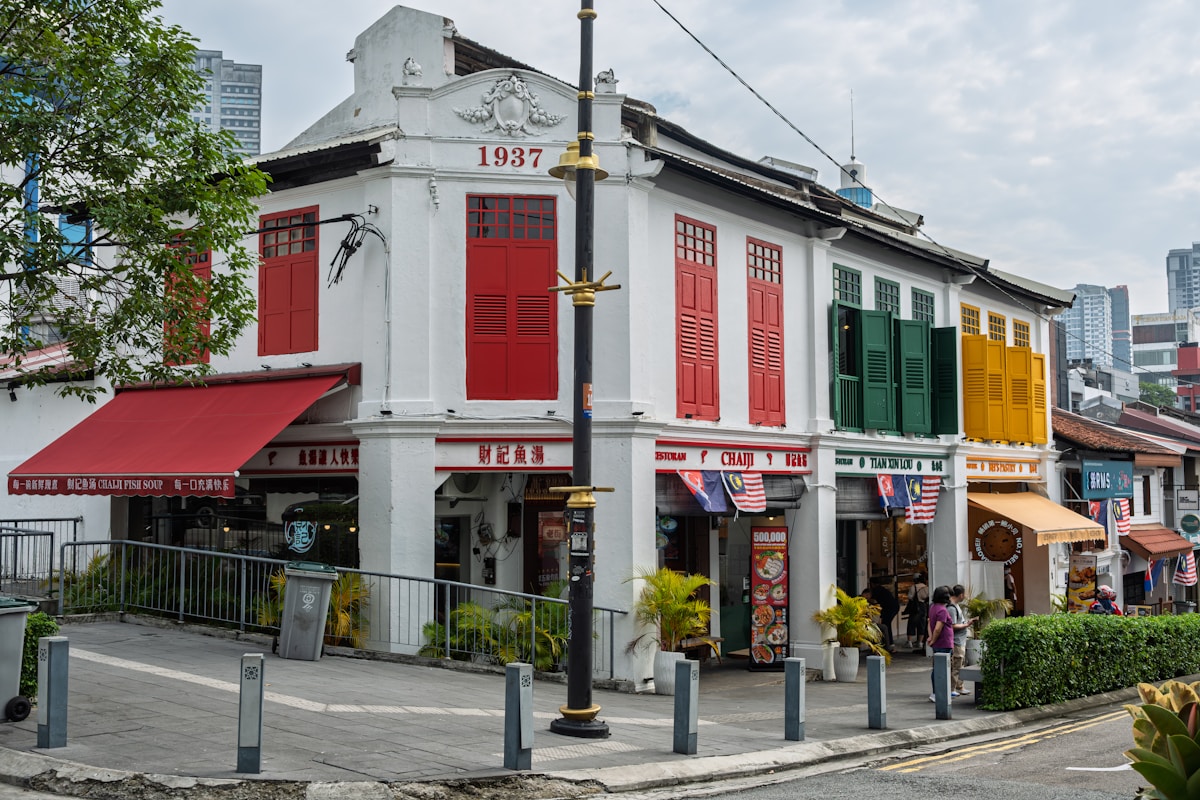
Ipoh Travel Guide: White Coffee, Cave Temples, and Colonial Streets
Ipoh's colonial old town, cave temples, street art, and white coffee make it Malaysia's most rewarding food city stop between KL and Penang.
Guides for Ipoh
Ipoh is the capital of Perak state and Malaysia’s third-largest city, with a population of around 800,000. For most of its modern history it was a tin mining centre - British colonial-era administrative buildings, Chinese clan associations, and the grand Ipoh Railway Station (nicknamed the Taj Mahal of Ipoh) remain from that period. The mining economy collapsed in the 1980s, but Ipoh has been undergoing a genuine, unhurried revival since the 2010s, driven by food tourism, street art, and returning residents opening cafés and creative businesses in the old shophouses.
The Old Town
Ipoh’s old town is on the east bank of the Kinta River. The Ipoh Railway Station and the adjacent Royal Ipoh Club are the most photographed colonial buildings - the station’s Moorish-influenced facade and white arched colonnades were designed by architect Arthur Benison Hubback, who also designed Kuala Lumpur’s Masjid Jamek.
The streets immediately surrounding the station - Jalan Panglima, Jalan Dato Maharajalela, Jalan Dato Tahwil Azar - form the core of the old town. Street art murals have appeared on the walls since around 2014. Ipoh’s murals are less curated than Penang’s but have a more organic quality - some by local artists without the commercial sponsorship that now characterises parts of Georgetown’s art trail. The pieces cluster around Mural Art’s Lane (Lorong Panglima, off Jalan Panglima).
The Concubine Lane area - a restored lane of shophouses between Jalan Bandar Timah and Jalan Dato Tahwil Azar - is the most tourism-developed part of the old town, with souvenir stalls and cafés, and generally most pleasant in the early morning or evening.
Cave Temples
Ipoh sits in a limestone valley ringed by dramatic karst outcrops. Several of these limestone formations contain natural caves that have been developed as Buddhist and Taoist temples over the past century.
Sam Poh Tong (south of the city, 6km from old town by Grab, RM8–12 one-way) is the largest cave temple complex. Entry is free. The temple extends deep into the limestone, with a tortoise pond at the end of the cave tunnel and a garden terrace with city views above. The vegetarian restaurant here is popular for lunch.
Kek Lok Tong (adjacent to Sam Poh Tong on the same road) is less commercialised and has an expansive garden at the rear of the cave with manicured bonsai and pavilions. Free entry.
Perak Tong (6km north of the old town, RM5 entry) contains a 12.8-metre-tall Buddha statue and 40 smaller shrines across multiple chambers. A steep staircase inside the cave leads to a viewpoint over the valley.
Ipoh’s Food Culture
Ipoh’s food scene is the primary reason most visitors come. The city has retained its old kopitiam culture better than KL or Penang - the original Chinese coffee shops with marble-top tables and rattan chairs are still operating, often in the same families that opened them.
Ipoh white coffee: The original white coffee shops - Old Town White Coffee (now a chain, avoid the chain version; seek the originals), Nam Heong Chicken Rice & Coffee Shop on Jalan Bandar Timah, and Lou Wong on Jalan Yau Tet Shin - serve the authentic article. Expect RM4–8 per cup with toast and half-boiled eggs.
Ayam Tauge (bean sprout chicken): A dish specific to Ipoh. Poached free-range chicken served over bean sprouts grown in Ipoh’s unusually mineral-rich water (the limestone filtration gives them a distinctive crispness), with a clear broth and soy dipping sauce. Price RM12–20. Best at Lou Wong Yuen Bean Sprout Chicken (Jalan Yau Tet Shin) - arrive by 11:30am as it sells out.
Hor Fun (flat rice noodles): Ipoh’s version uses a silkier noodle than KL-style due to the mineral water in which it is made. Served in a clear chicken broth or dry with soy sauce, RM7–10.
Heong Peng: Honey-filled flaky pastry biscuits, the standard souvenir from Ipoh. Available in most old town bakeries, RM8–15 for a box.
Getting There
By train: ETS from KL Sentral to Ipoh, approximately 2 hours. Fares RM35–60 depending on class and advance booking. Ipoh Railway Station is in the city centre, walkable to the old town. Book at ktmb.com.my.
By bus: Frequent departures from KL’s TBS terminal to Ipoh Amanjaya bus station (2–3 hours, RM12–18). From Amanjaya, Grab to old town takes 15 minutes and costs RM12–18.
By car: Approximately 2 hours from KL via the North-South Expressway (E1). Parking is available near the old town.
Getting Around
Ipoh’s old town is compact enough to walk. The cave temples require transport - Grab works reliably in Ipoh. A tuk-tuk service operates around the old town for short hops. Taxis are available from the railway station, though Grab is more reliable for pricing.
Choosing between Ipoh and Malaysia’s other heritage city stop? See Ipoh vs Malacca for a direct comparison of food, history, logistics, and who each destination suits.
Browse tours and activities, Book airport transfers, or Get a Malaysia eSIM.
More Ipoh Guides
- Things to do in Ipoh - cave temples, old town murals, Concubine Lane, and white coffee cafes
- Best hotels in Ipoh - boutique heritage hotels in the old town and modern options near the train station
- Food to try in Ipoh - white coffee, dim sum, nga choy kai, and the best kopitiam in the old town
- Ipoh vs Malacca - comparing Malaysia’s two most visited heritage cities on food, history, and logistics
- Best food in Malaysia - how Ipoh’s white coffee and ayam tauge fit into Malaysia’s broader food story
- ETS and KTM trains in Malaysia - how to take the train from KL Sentral or Penang to Ipoh railway station
- Pangkor Island guide - the closest beach escape from Ipoh: ferries from Lumut, beaches, and hornbills
Upcoming Events in Ipoh
Deepavali 2026
Deepavali 2026 falls on 20 October - a public holiday across Malaysia. Brickfields in KL and Little India in Penang are the most atmospheric spots.
Book an experience
Top experiences in Ipoh
Explore the best tours and activities in Ipoh, with instant confirmation and free cancellation on most bookings.