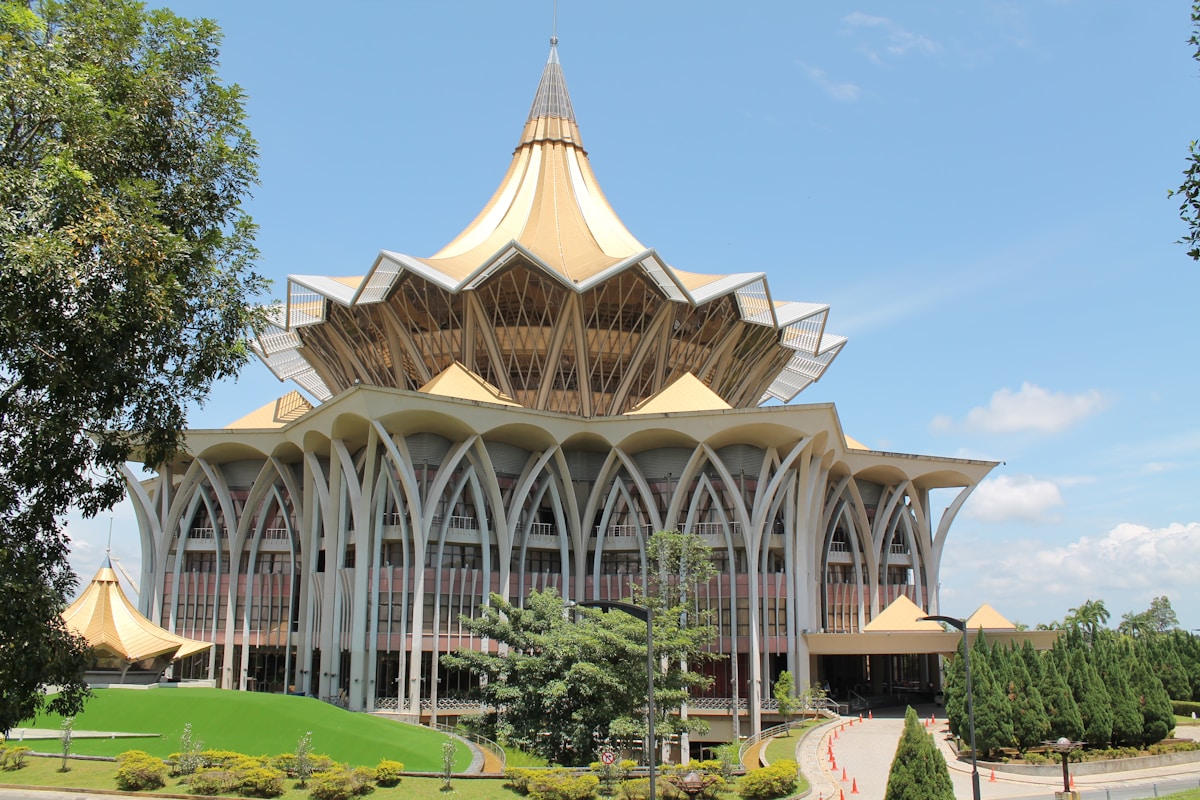
Kuching Travel Guide
Plan your trip to Kuching — Sarawak's capital, Semenggoh orangutans, Bako National Park, and one of Borneo's best food scenes.
Guides for Kuching
Kuching is the capital of Sarawak and the most compelling city in Malaysian Borneo. Its population of around 750,000 makes it a mid-sized city by Malaysian standards, but it carries far more cultural and culinary depth than its size suggests. The city’s name means “cat” in Malay - or possibly derives from a local fruit or a village name, depending on which historian you consult - and the cat identity has been enthusiastically adopted: bronze cat sculptures stand at key intersections, and a small Cat Museum occupies a city hall annex.
More substantively, Kuching has a colonial riverside precinct that is genuinely atmospheric rather than merely preserved for tourism, the finest museum in Borneo, a food scene that is among the most distinctive in Malaysia, and fast access to two of Sarawak’s most important wildlife sites. Semenggoh Wildlife Centre - where semi-wild rehabilitated orangutans move freely through forest and occasionally appear at a feeding platform - is 24km south. Bako National Park - a peninsula of coastal forest and sandstone cliffs with proboscis monkeys as common as squirrels - is 37km away. Guided tours from Kuching are particularly useful for Semenggoh and Bako, combining timed transport with a guide who knows where to look.
Getting to Kuching
Kuching International Airport (IATA: KCH) is served by direct flights from Kuala Lumpur (approximately 1.5 hours on Malaysia Airlines, AirAsia, and Batik Air), Kota Kinabalu (approximately 40 minutes), and Johor Bahru. Singapore connections exist but typically route via KL. The airport is about 12km from the city centre.
From the airport, Grab costs RM20–30 to the historic waterfront. Airport taxis use a coupon system from the terminal - prices are fixed and displayed at the counter (typically RM35–45 depending on zone). Journey time is 20–30 minutes.
Getting Around Kuching
The historic centre is compact and walkable. The waterfront, Sarawak Museum, Main Bazaar, and Old Courthouse are within 15 minutes on foot from each other. For Semenggoh and Bako - the two most important day trips - the options differ.
Semenggoh: Grab from central Kuching costs approximately RM30 each way and takes 30 minutes. Several tour operators offer morning transfers timed around the 9–10am feeding session.
Bako National Park: There is no direct Grab service to Bako’s jetty. Bus 1 from Kuching’s Jalan Masjid terminus runs to Kampung Bako village (30 minutes, RM3), from where a shared or private boat crosses to the park jetty (10–15 minutes, RM10–25 depending on whether you share). The boat to the park must be booked through the Sarawak Forestry Corporation - permits and accommodation (if staying overnight) are managed online.
Within Kuching itself, Grab is consistent and affordable for distances beyond easy walking.
Key Areas
The Kuching Waterfront is the city’s social and visual centre - a 1km promenade facing the Sarawak River, with the white-walled Astana (Rajah’s palace) and the black-turreted Fort Margherita visible on the opposite bank. The colonial-era buildings along the waterfront date to the Brooke Raj period, when a series of British Rajahs governed Sarawak as a personal kingdom from 1841 to 1946. The buildings are in better condition than comparable colonial architecture in many Southeast Asian cities.
Main Bazaar runs parallel to the waterfront and is KUching’s historic commercial strip. Chinese shophouses from the 19th and early 20th centuries house antique dealers, craft shops, cafés, and a few remaining traditional traders. The India Street end of the bazaar has textile shops, money changers, and the Sri Mahamariamman Temple.
Padungan is a slightly newer commercial district a kilometre east of the main bazaar. It has the highest concentration of independent restaurants, specialty coffee shops, and evening food options in the city.
Kuching’s Food Identity
Sarawak laksa, kolo mee, and umai are the three dishes that define Kuching’s culinary identity and differ significantly from anything on the peninsular Malaysian menu. The specifics are covered in our food guide for Kuching, but the short version: eating well in Kuching requires almost no effort - cheap, excellent food is in every coffee shop, market, and hawker row in the historic centre.
Climate
Kuching is equatorial and receives rainfall year-round with no pronounced dry season. Heavy afternoon downpours are common in most months and typically pass within an hour. The city is walkable in light rain, and most attractions - Bako, Semenggoh, the museum - are either sheltered or situated where rain is part of the experience anyway. There is no bad month to visit; some travellers find February to April marginally drier, though this varies year to year.
Deciding between Sarawak and Sabah? Our Kota Kinabalu vs Kuching comparison covers the differences in wildlife access, city character, cost, and what each destination does best.
More Kuching Guides
- Things to do in Kuching - Bako National Park, Semenggoh orangutans, the Waterfront, Sarawak Museum, and day trips
- Best hotels in Kuching - heritage boutique hotels in the old quarter, Waterfront options, and budget choices
- Food to try in Kuching - Sarawak laksa, kolo mee, umai, and the best kopitiam and hawker rows in Kuching
- Kuching wildlife guide - orangutans at Semenggoh, proboscis monkeys, hornbills, and how to see Bako’s wildlife
- Bako National Park guide - the best day trip from Kuching for proboscis monkeys, pitcher plants, and coastal hiking
- Borneo wildlife guide - how Kuching’s orangutans and proboscis monkeys fit into Borneo’s broader wildlife story
- Two weeks in Borneo itinerary - a 14-day Borneo route that begins in Kuching and works north through Mulu and Kota Kinabalu
- Borneo adventure itinerary - 10-day route from KK through Sandakan, Kinabatangan, and Kuching
- Kota Kinabalu vs Kuching comparison - Sabah vs Sarawak: wildlife access, city character, and logistics compared
Upcoming Events in Kuching
Deepavali 2026
Deepavali 2026 falls on 20 October - a public holiday across Malaysia. Brickfields in KL and Little India in Penang are the most atmospheric spots.
Book an experience
Top experiences in Kuching
Explore the best tours and activities in Kuching, with instant confirmation and free cancellation on most bookings.