Food to Try in Malacca
Book an experience
Top-rated experiences in Malacca Travel Guide
The highest-rated tours and activities in Malacca Travel Guide. Book today, cancel free if plans change.
Malacca’s food culture is one of the strongest reasons to visit - and one of the most underrated among travellers who see the city primarily as a heritage destination. The Peranakan (Nyonya) kitchen is the centrepiece: a cuisine that developed among Straits-born Chinese settlers who adopted Malay spices, aromatics, and techniques while maintaining Chinese approaches to protein and noodle cooking. The result is a flavour profile unlike anything else in Malaysia.
Nyonya Cuisine
Ayam Ponteh is one of the defining Nyonya dishes - chicken (or pork, in some versions) braised with fermented soybean paste (tauchu), potato, and a range of aromatic spices. The sauce is dark, rich, and rounded without being heavy. It is eaten with rice. Most Nyonya restaurants in Malacca serve it. Expect to pay RM15–25 for a portion.
Asam Pedas - literally “sour and spicy” - is a Malay dish that Nyonya cooking absorbed and adapted. Fish (typically stingray, mackerel, or seabass) is cooked in a tamarind-soured gravy with chilli, galangal, turmeric leaf, and ginger flower (bunga kantan). The sourness is pronounced and deliberate. It is one of the better fish dishes in Malaysian cuisine. RM15–25.
Nyonya Laksa differs from Penang’s more famous version. Malacca’s Nyonya laksa uses a coconut-milk-enriched broth with a lighter, more fragrant spice base. The noodles are thick rice noodles, topped with bean sprouts, hard-boiled egg, fried tofu, and prawns or cockles. It is less punchy than Penang laksa and more suited to those less accustomed to strong fish paste flavours. RM8–12 at hawker stalls.
Pineapple Tarts (Kuih Tart) are a Nyonya pastry fixture - buttery shortcrust pastry filled with a thick, jammy pineapple filling. They appear at every Peranakan celebration and are sold in virtually every souvenir shop in Malacca. The version made fresh in small bakeries is substantially better than the packaged souvenir versions.
Itik Tim - a duck soup with salted mustard greens, tomatoes, and plum - is a dish less commonly seen outside Peranakan homes. Some of the older Nyonya restaurants in Malacca still serve it. Worth trying if it appears on the menu.
Chicken Rice Balls
A Malacca invention with no direct equivalent elsewhere in Malaysia. Hainanese chicken - poached in stock, served at room temperature - is accompanied by rice that has been compressed and rolled into compact spheres rather than served loose. The balls are about the size of a golf ball and have a firm, slightly sticky texture. You eat them whole or break them apart.
Chung Wah Restaurant on Jonker Street is the institution - a ground-floor kopitiam that has been serving chicken rice balls since the 1940s. The portions are generous, the price reasonable (RM10–15 per set), and the queue at peak times is long. Worth it. Hong Kong Restaurant nearby is the other longstanding option.
Jonker Street Night Market
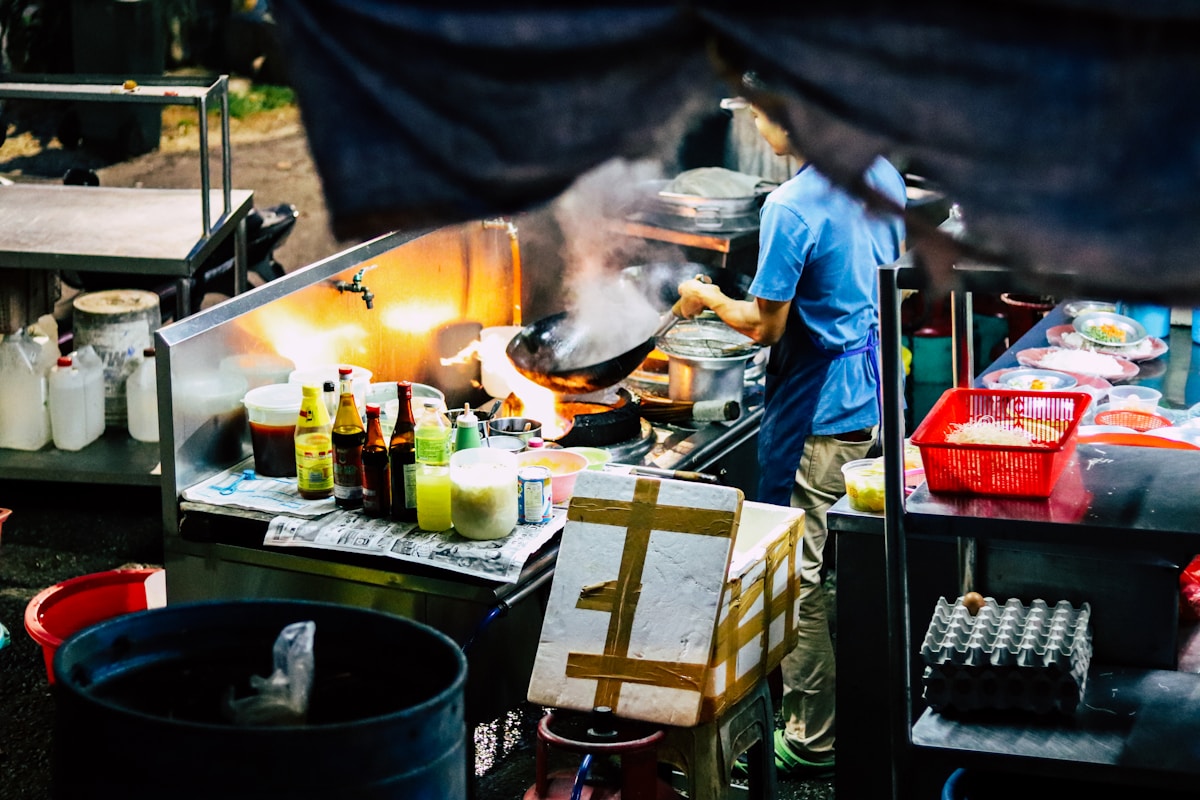
The Friday and Saturday evening market on Jalan Hang Jebat runs from around 6pm until midnight. Food stalls serve: grilled skewered meats, popiah (fresh spring rolls with turnip and shrimp), pineapple tarts, oyster omelettes (orh chien), Nyonya kuih (steamed and fried rice flour cakes), and barbecued corn.
Jonker 88 - a stall at the market end of the street - is the go-to for cendol (RM4–6): shaved ice over green rice flour noodles (pandan-flavoured), red bean, and palm sugar syrup. Coconut milk is poured over at the end. In the Malacca heat, it is one of the more satisfying things on the menu.
Portuguese Eurasian Food
The Portuguese Settlement (Medan Portugis) sits about 3 km from the city centre - a cluster of restaurants and family houses where descendants of 16th-century Portuguese colonists maintain a distinct culinary tradition.
Devil’s Curry (Curry Debal) is the headline dish - a dark, fiery curry made with pork, pork sausages, vinegar, and a complex spice paste including dried chillies, mustard seeds, and galangal. It is traditionally cooked on special occasions and Sundays. Several restaurants in the settlement serve it on weekends. RM20–35 per portion.
General Eurasian cooking at the settlement includes grilled seafood, caldereta (a mild Portuguese-derived stew), and various pork dishes that are unavailable in Malacca’s Malay and Muslim establishments. The atmosphere on weekend evenings - long tables under a covered plaza near the sea - suits a slow dinner more than a quick stop.
Book a food tour, or Get a Malaysia eSIM.
Where to Eat Nyonya Food
Restoran Peranakan (Jalan Hang Jebat) and Nancy’s Kitchen (Jalan Hang Lekir) are reliable mid-range Nyonya restaurants with menus in English and a range of the classic dishes. Expect RM30–60 per person for a multi-dish meal with rice. Both are consistently recommended and have been operating for years.
For a full picture of Malacca’s sights to pair with the food, the Baba Nyonya Heritage Museum visit provides context that makes the cuisine more legible - the kitchen traditions are part of the same cultural story as the furniture, textiles, and architecture.
Frequently Asked Questions
- What is Nyonya food and where can I eat it in Malacca?
- Nyonya (Peranakan) cuisine developed among Straits-born Chinese settlers who adopted Malay spices and techniques. Key dishes include Ayam Ponteh, Asam Pedas, and Nyonya Laksa. Restoran Peranakan on Jalan Hang Jebat and Nancy's Kitchen on Jalan Hang Lekir are reliable mid-range options; expect RM30–60 per person for a multi-dish meal.
- What are chicken rice balls and where are they from?
- Chicken rice balls are a Malacca invention - Hainanese-style poached chicken served alongside rice pressed into compact spheres rather than served loose. Chung Wah Restaurant on Jonker Street is the institution, serving them since the 1940s. A set costs RM10–15.
- Where should I eat in Malacca for the best street food?
- The Jonker Street night market on Friday and Saturday evenings (from around 6pm) is the best street food experience - stalls serve popiah, oyster omelettes, Nyonya kuih, and cendol. Jonker 88 is the go-to stall for cendol (RM4–6). The Portuguese Settlement (Medan Portugis) is the place to eat Devil's Curry on weekend evenings.
Ready to explore?
Browse hundreds of tours and activities. Book securely with free cancellation on most options.
Browse on GetYourGuide →Best price guaranteed: same price as booking direct. We earn a small commission at no extra cost to you.