Malaysia Travel Costs: Budget Guide 2026
Malaysia sits in the middle tier of Southeast Asian travel costs - cheaper than Singapore and Thailand’s tourist zones, more expensive than Cambodia or Vietnam. The currency is the Malaysian Ringgit (RM or MYR). At current rates, 1 USD ≈ 4.7 RM.
Accommodation
Malaysia’s accommodation range is wide. Costs vary by city - Kuala Lumpur and Penang are pricier than smaller towns.
| Type | Cost per night |
|---|---|
| Hostel dorm bed | RM40–80 (USD 9–17) |
| Budget guesthouse, double | RM80–140 (USD 17–30) |
| Mid-range hotel, double | RM150–350 (USD 32–75) |
| Boutique hotel, heritage | RM250–450 (USD 53–96) |
| Luxury hotel (KL, Penang) | RM400–900+ (USD 85–190) |
Penang has excellent mid-range boutique options in renovated shophouses - RM180–280 for something with genuine character. In KL, central location comes at a premium; areas like Bukit Bintang and KLCC command 20–40% more than equivalent rooms in Bangsar or Chow Kit. For specific property picks across all KL neighbourhoods and budgets, see our Kuala Lumpur hotels guide.
Food
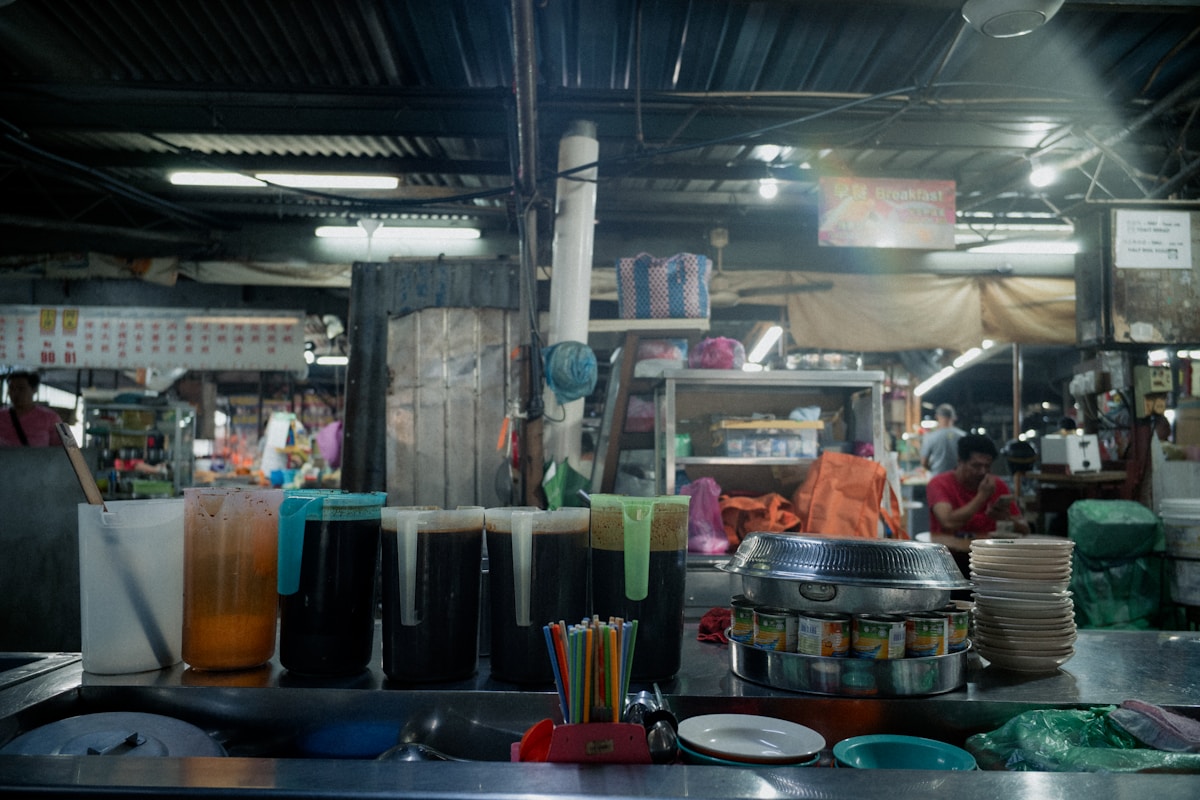
Malaysian food pricing is one of the most compelling arguments for visiting. Hawker stalls and kopitiams (coffee shops) serve full meals at prices that have no equivalent in Western cities.
| Meal type | Cost per person |
|---|---|
| Hawker stall (nasi lemak, char kway teow, laksa) | RM5–12 |
| Kopitiam (coffee + toast + eggs) | RM5–8 |
| Mid-range restaurant, Chinese or Malay | RM20–40 |
| Western café or Italian | RM50–90 |
| Fine dining | RM120–250 |
| Kopi O (black coffee, kopitiam) | RM1.50–2.50 |
| Fresh coconut | RM3–5 |
| Tiger or Carlsberg at a restaurant | RM12–18 |
Eating exclusively at hawker stalls and kopitiams - which is genuinely good eating, not a compromise - keeps food costs under RM40 per day. The 10% service charge added to restaurant bills is standard; tipping on top is not expected or common.
Transport
| Journey | Cost |
|---|---|
| KL city centre Grab ride (3–5km) | RM8–15 |
| KL LRT/MRT/Monorail (short hop) | RM1.50–3.50 |
| KL to airport (ERL) | RM35–55 |
| Grab to KLIA from central KL | RM50–90 |
| KL to Penang by bus | RM35–45 |
| KL to Penang by ETS train | RM80–95 |
| KL to Penang by flight (AirAsia) | RM60–150 |
| KL to Kota Kinabalu flight | RM100–280 |
| Penang-Butterworth ferry | RM1.20 |
Activities and Attractions
| Activity | Cost |
|---|---|
| Petronas Twin Towers skybridge | RM80 (standard), RM170 (observation deck combo) |
| Batu Caves | Free entry; RM5 for cave museum |
| Penang Hill funicular | RM30 adults |
| Georgetown street art walk | Free |
| KL Bird Park | RM67 adults |
| Sepilok Orangutan Rehabilitation Centre | RM30 adults |
| Sun Bear Conservation Centre, Sepilok | RM30 adults |
| Kinabalu Park entrance | RM15 |
| Mount Kinabalu climb permit | RM200–300 (conservation fee + guide) |
| Sipadan dive (permit + guide) | RM250–400 per day |
| Longhouse visit, Sarawak | RM100–200 via operator |
Most temples, mosques, markets, and public beaches are free. National parks charge entry fees but they are generally modest.
Sample Daily Budgets
Budget traveller (RM120–200 / USD 25–43) Hostel dorm, hawker stalls for all meals, LRT and buses for transport, free attractions. Realistic in KL and Penang with discipline. Harder in Sabah where food and transport options thin out.
Mid-range (RM350–600 / USD 75–128) Mid-range hotel or boutique guesthouse, one or two restaurant meals plus hawker stalls, Grab for convenience, one or two paid attractions. Comfortable travel with no major compromises.
Comfort (RM700–1200 / USD 150–255) Four-star hotel, restaurant dining for most meals, flights between destinations, guided tours. Most Western travellers find the top end of this bracket very comfortable.
Compare travel insurance, Get a Malaysia eSIM, or Search cheap flights.
Currency and ATMs
The ringgit is available from ATMs across Malaysia. CIMB Bank and Maybank ATMs are the most reliable for foreign cards - they accept Visa, Mastercard, and most international debit cards. Expect a 3–6% foreign transaction fee from your home bank plus a RM8–12 local withdrawal fee per transaction. Withdraw larger amounts less frequently to minimise fees.
Cash is essential at hawker stalls, local markets, and rural areas. Carry RM100–200 in small notes at all times.
Money changers in shopping malls (not banks) typically offer better exchange rates than banks for cash. The Golden Triangle in KL has numerous reputable money changers in KLCC and Pavilion mall surrounds.
Related guides: Malaysia packing list | Tourist scams and tipping in Malaysia | Solo travel in Malaysia | Malaysia with kids
Plan Your Trip
✈️ Book your flights to Malaysia 🛡️ Get travel insurance 📱 Stay connected with an eSIM 🚗 Rent a car
Book an experience
Top tours to book now
Already planning? These are the most popular experiences for this destination.
Frequently Asked Questions
- Is Malaysia expensive to travel?
- No. Malaysia is one of the better-value destinations in Southeast Asia, particularly for food and public transport. A budget traveller spending carefully can get by on RM120–200 (USD 25–43) per day. Cities are modestly priced by Western standards; tourist sites and international restaurants cost more.
- Can I use US dollars in Malaysia?
- Technically yes in some tourist-facing businesses, but the Malaysian Ringgit (RM) is standard everywhere. Rates for USD cash payments are invariably worse than using RM. Use ATMs or exchange currency for better value.
- Is credit card accepted widely in Malaysia?
- In cities, hotels, malls, and restaurants, yes - Visa and Mastercard are widely accepted. At hawker stalls, wet markets, local buses, and in rural areas, cash is essential. Carry RM50–100 in small notes at all times.